01The geometry of survival
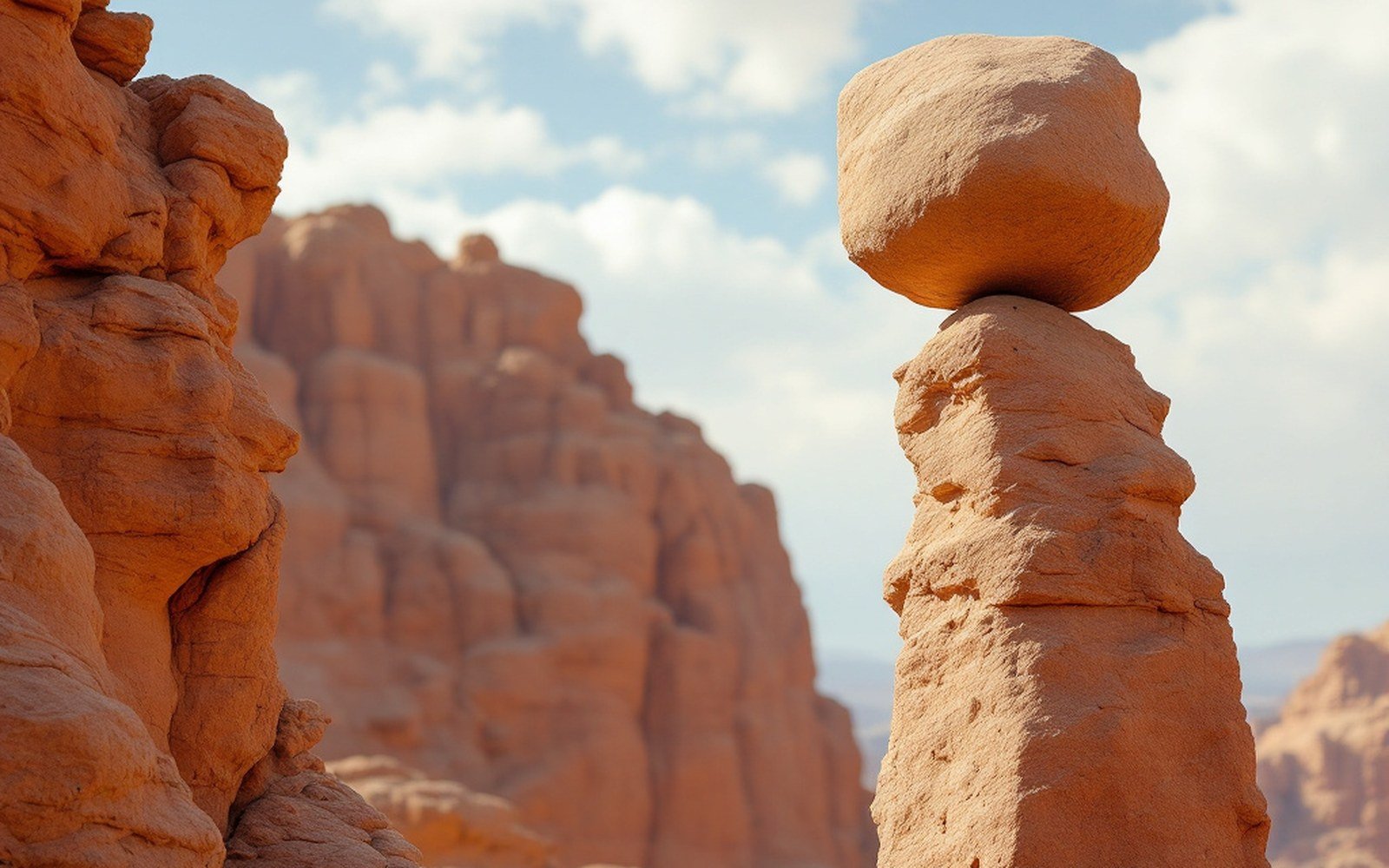
A hoodoo is not an unusual rock. It is an ordinary one that happened to have something sitting on top of it.
Once the cap falls, the soft rock beneath it erodes quickly and completely, and there is nothing left to show where the tower stood.
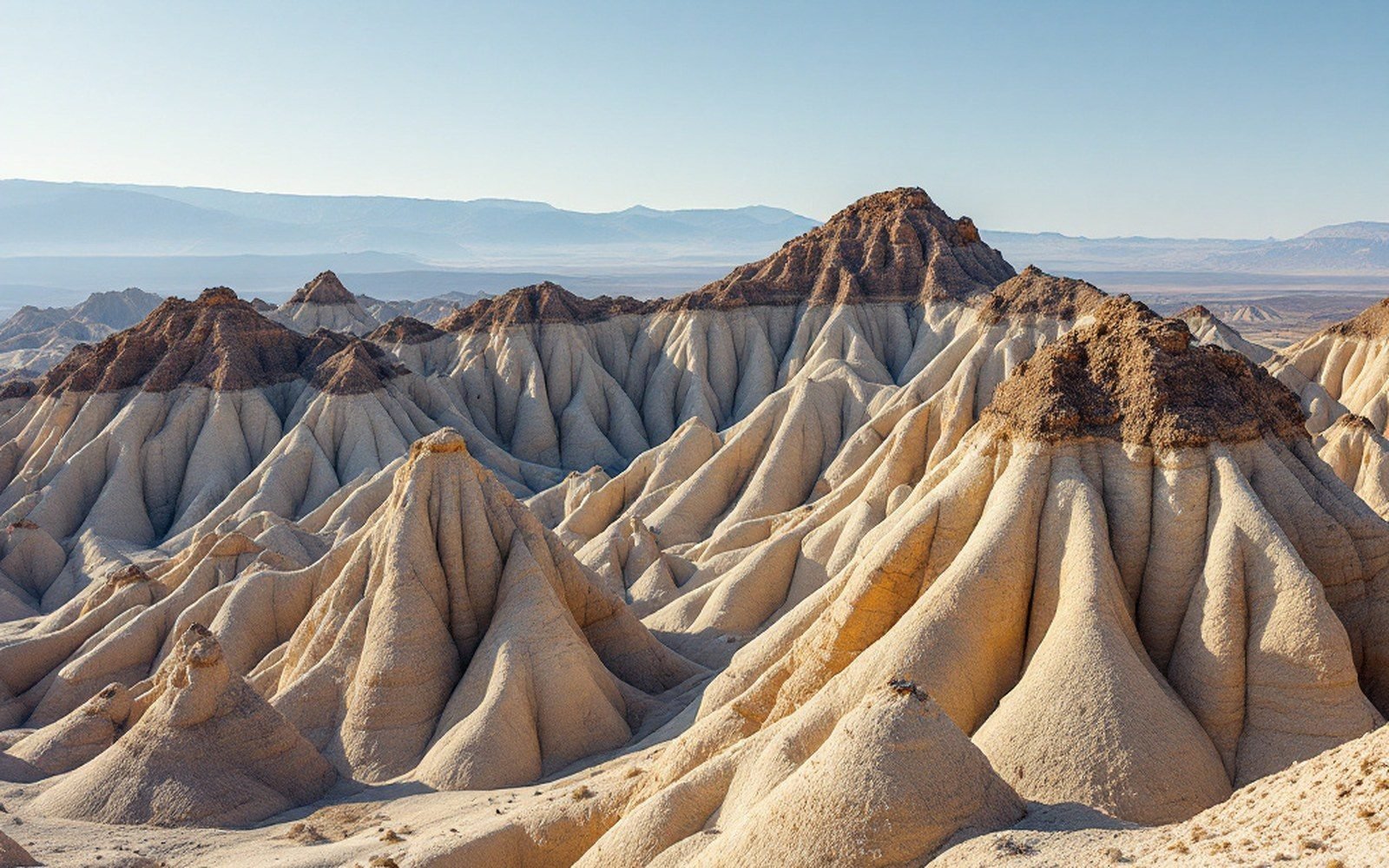
Around Kasha-Katuwe (35.665°N, 106.408°W), the terrain is built almost entirely from the Bandelier Tuff — a thick deposit of pumice-rich ash that erupted from the Valles Caldera in two main pulses, roughly 1.6 million and 1.25 million years ago. The lower, unwelded layers are soft enough to crumble between fingers. Rain cuts into them quickly, carving gullies that deepen with each storm. Left alone, the whole formation would reduce to a low, featureless slope within a geologically short time.
What slows that process is the welded tuff capping the sequence. Closer to the eruption's source, the ash fell so hot and so thick that it fused under its own weight into a dense, glassy rock that resists weathering the way a loose pile of ash cannot. Where a joint or a crack isolates a column of soft pumice beneath a remnant of that hard cap, erosion works around it instead of through it. The caprock sheds water, the soft rock beneath retreats inward, and the taper forms — wide at the base, narrowing toward the cap above. The characteristic cone shapes at Kasha-Katuwe are not exceptions to the erosion; they are erosion, doing exactly what it always does, just working slower in one place than in all the surrounding ones.
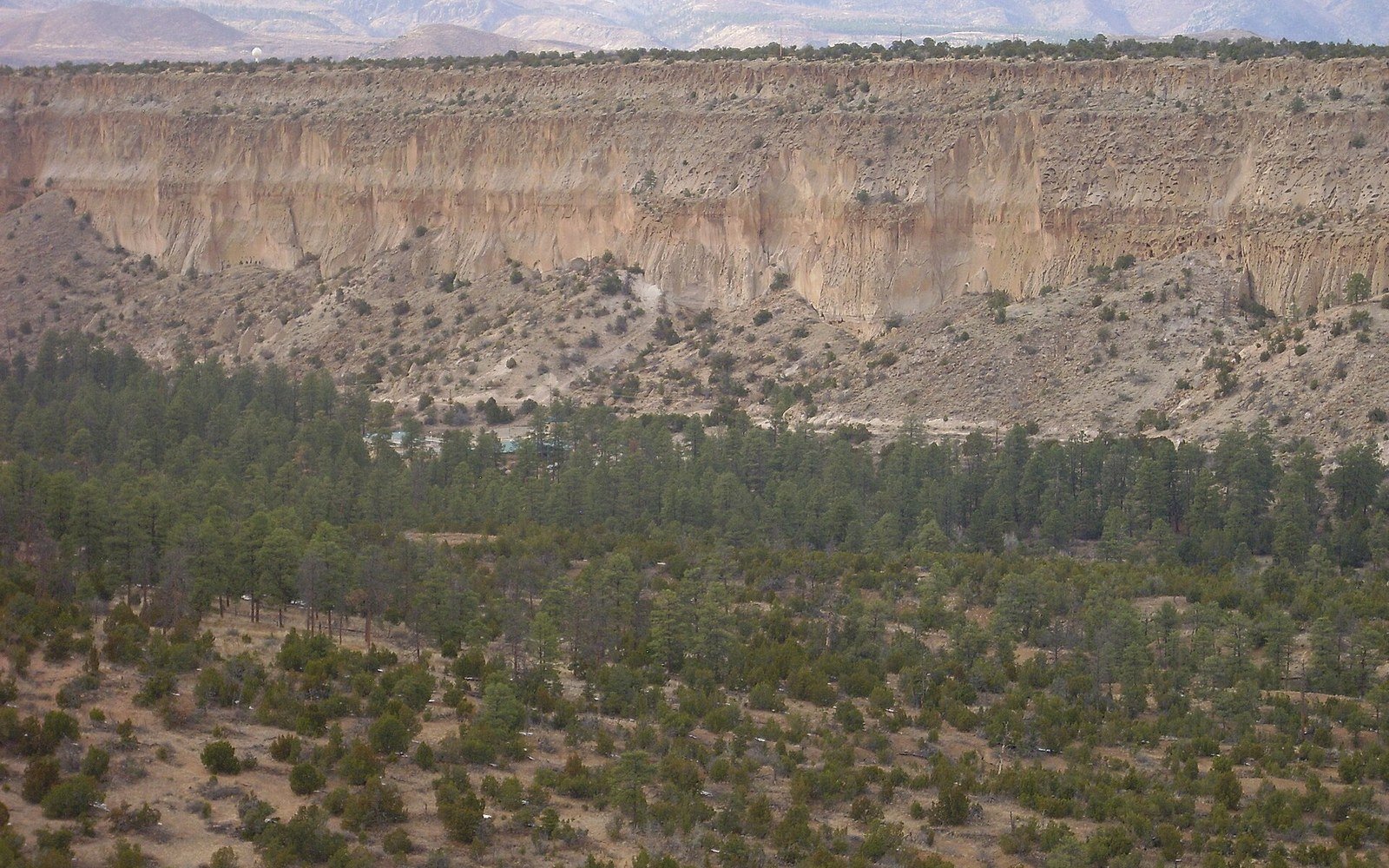
The critical variable is how long the caprock holds. A cap with a fracture lets water in from above, and the column loses its shelter from the top down. Most hoodoos in an eroding field show every stage: fresh caps, cracked caps, tilted caps, caps that have slid off entirely and left their columns exposed to rapid removal. The sequence is the same wherever a hard layer sits over a soft one — in the Bandelier Tuff above the Pajarito Plateau, in the ignimbrites of other rift margins worldwide. Kasha-Katuwe makes it legible because the scale is human: the forms are tall enough to read and young enough not to have gone.
Once the cap falls, the soft rock beneath it erodes quickly and completely, and there is nothing left to show where the tower stood.