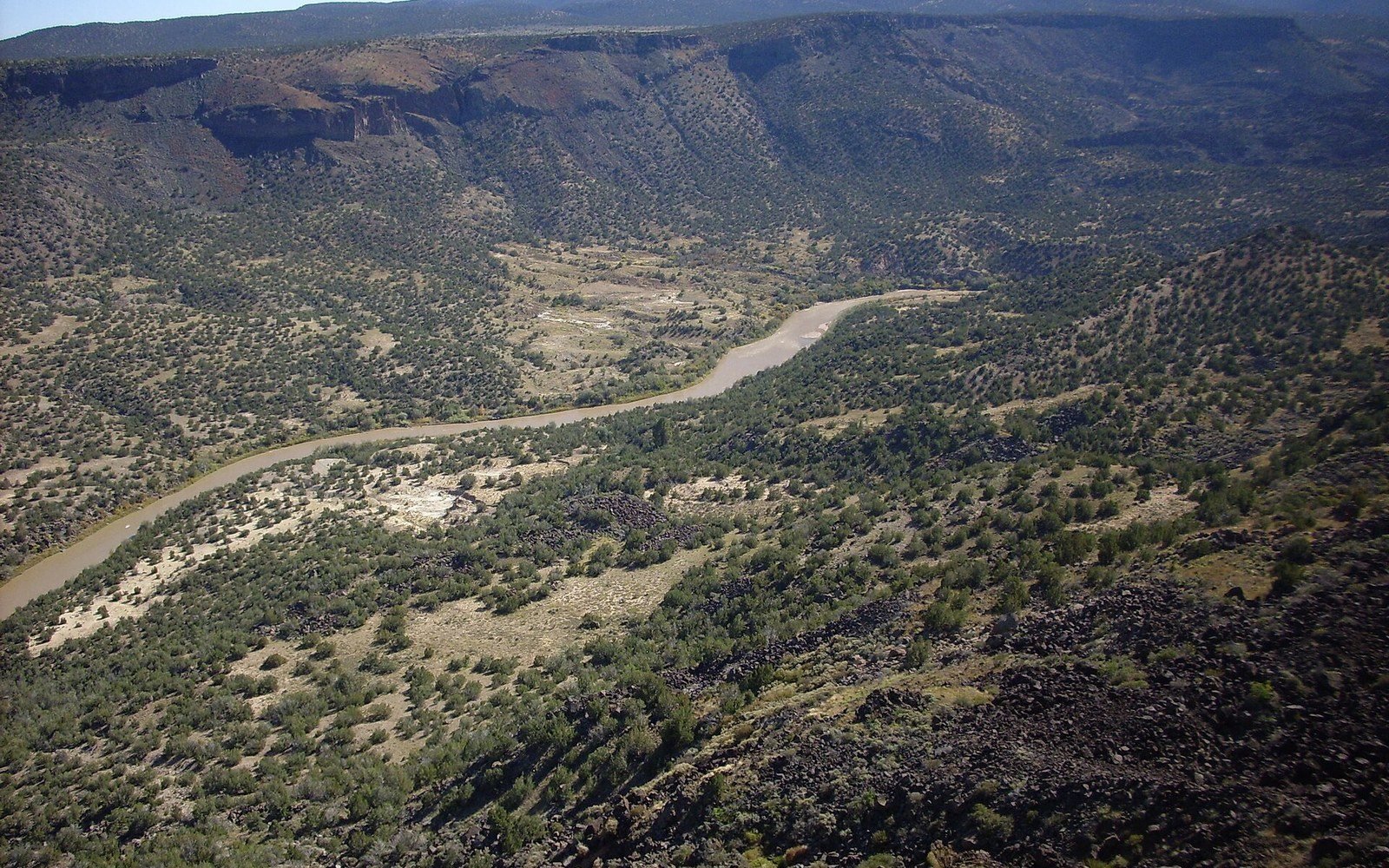
01A plateau the river has been dismantling for two million years
The Cerros del Rio (35.9°N, 106.1°W) sit on the western rim of the Rio Grande gorge north of Santa Fe, a broad volcanic plateau built from basalt flows that erupted between roughly 2.7 and 1.6 million years ago. The name means little more than "hills of the river," and the landform delivers on that plainness: dark, flat-topped mesas rising above a canyon whose walls are essentially a cross-section through the eruptive history of the plateau itself.
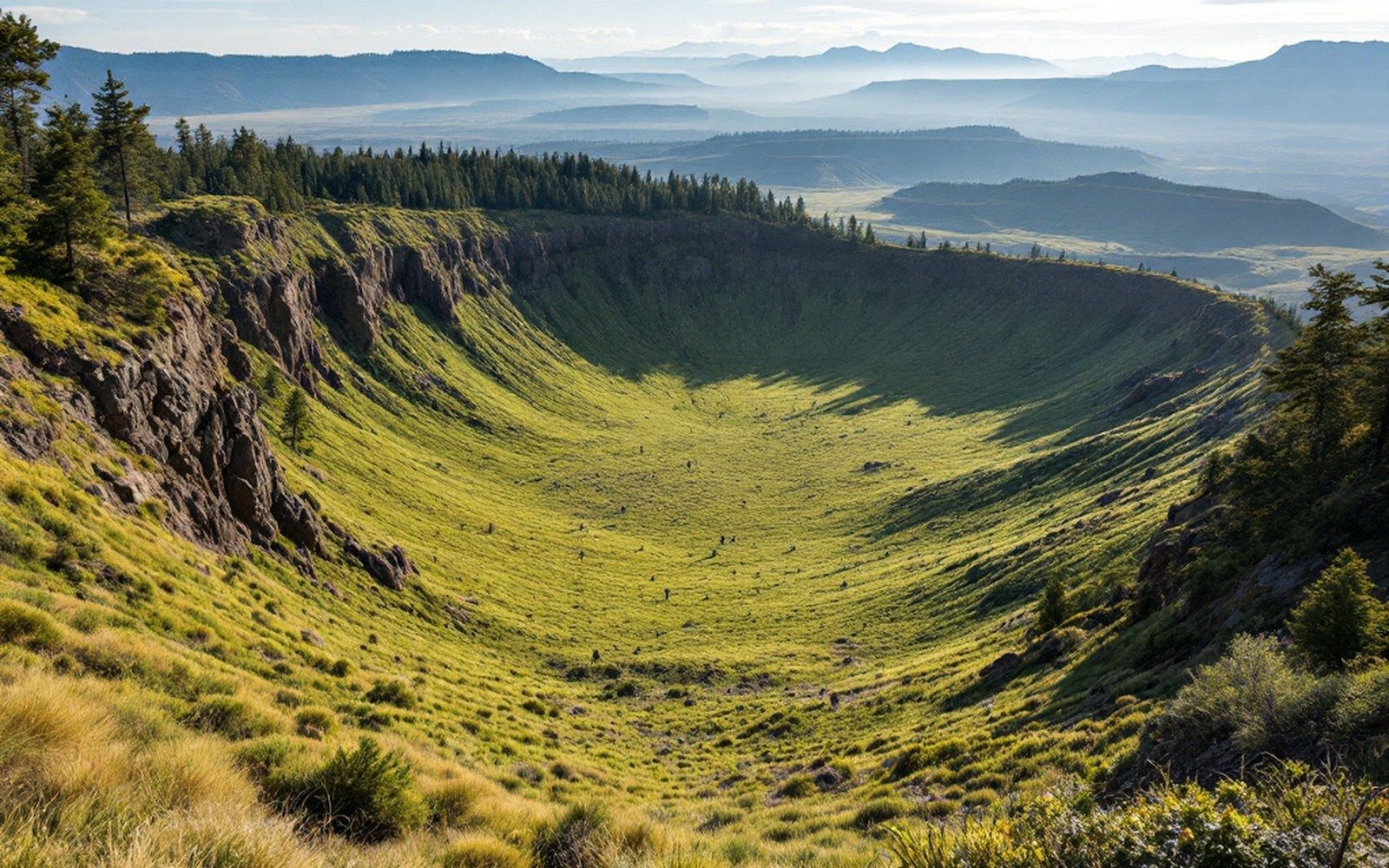
The flows belong to the early output of the Jemez volcanic field, a system that was building its magmatic plumbing on the rift's western flank while the basin below was simultaneously subsiding. Extension — the slow pulling apart of the crust along the Rio Grande rift — thinned the lithosphere enough to let basaltic magma rise through fissures with relatively little modification. What erupted was fluid and hot, spreading across the landscape in thin sheets that stacked up over hundreds of thousands of years. Individual flows are often only a few metres thick, but the pile they form reaches tens of metres in the canyon walls, each unit readable as a distinct dark band separated by reddened baked soil or rubble that marks the surface between one eruption and the next.
The Rio Grande has done most of the interpretive work. As the river cut downward — driven partly by regional uplift, partly by its own gradient — it sliced through the plateau and exposed the stratigraphy in near-vertical walls. The gorge here is not the dramatic chasm of the Taos area to the north, but it is deep enough to show the architecture clearly: flow on flow, each with a dense, fine-grained interior that cooled slowly and a vesicular top where gas escaped before the lava solidified. According to USGS mapping of the region, the Cerros del Rio lavas are chemically similar to other rift-related basalts in the area — low-silica, iron- and magnesium-rich — consistent with a mantle source tapped by the thinning crust beneath.
The plateau surface itself is a study in what basalt does after eruption stops. Desert varnish — a dark manganese- and iron-rich coating deposited by microbes and wind-borne dust over millennia — stains the exposed rock surfaces. The same slow accumulation of varnish on basalt boulders along the Rio Grande escarpment further south provided the dark canvas that Ancestral Pueblo people used for petroglyphs at sites including Petroglyph National Monument, and similar surfaces exist across the Cerros del Rio, though this is rift-margin basalt country rather than a monument precinct.
Cerros del Rio also sits in the zone monitored for present-day crustal motion. UNAVCO operates continuous GPS stations across the rift corridor, and geodetic data show the western margin of the rift — the side the Cerros del Rio occupy — moving away from the Sangre de Cristo Mountains to the east at a rate of a few millimetres per year. The volcanic plateau is not merely a record of what the rift did two million years ago; it rides on crust that is still extending now, faults still active beneath the sediment and rock.
What erupted was fluid and hot, spreading across the landscape in thin sheets that stacked up over hundreds of thousands of years.
Below the basalt, the basin fill continues to accumulate. The plateau's edge is effectively an escarpment where erosion has stripped the volcanic cap and exposed the softer sediments beneath, the same relationship of hard rock over soft that drives the formation of tent rocks and hoodoos in similar geology to the south. Here the scale is larger and the forms less delicate — the river is the sculptor, and it works in gorges rather than cones — but the controlling principle is identical: the resistant basalt defines what survives, and everything else is carved away.