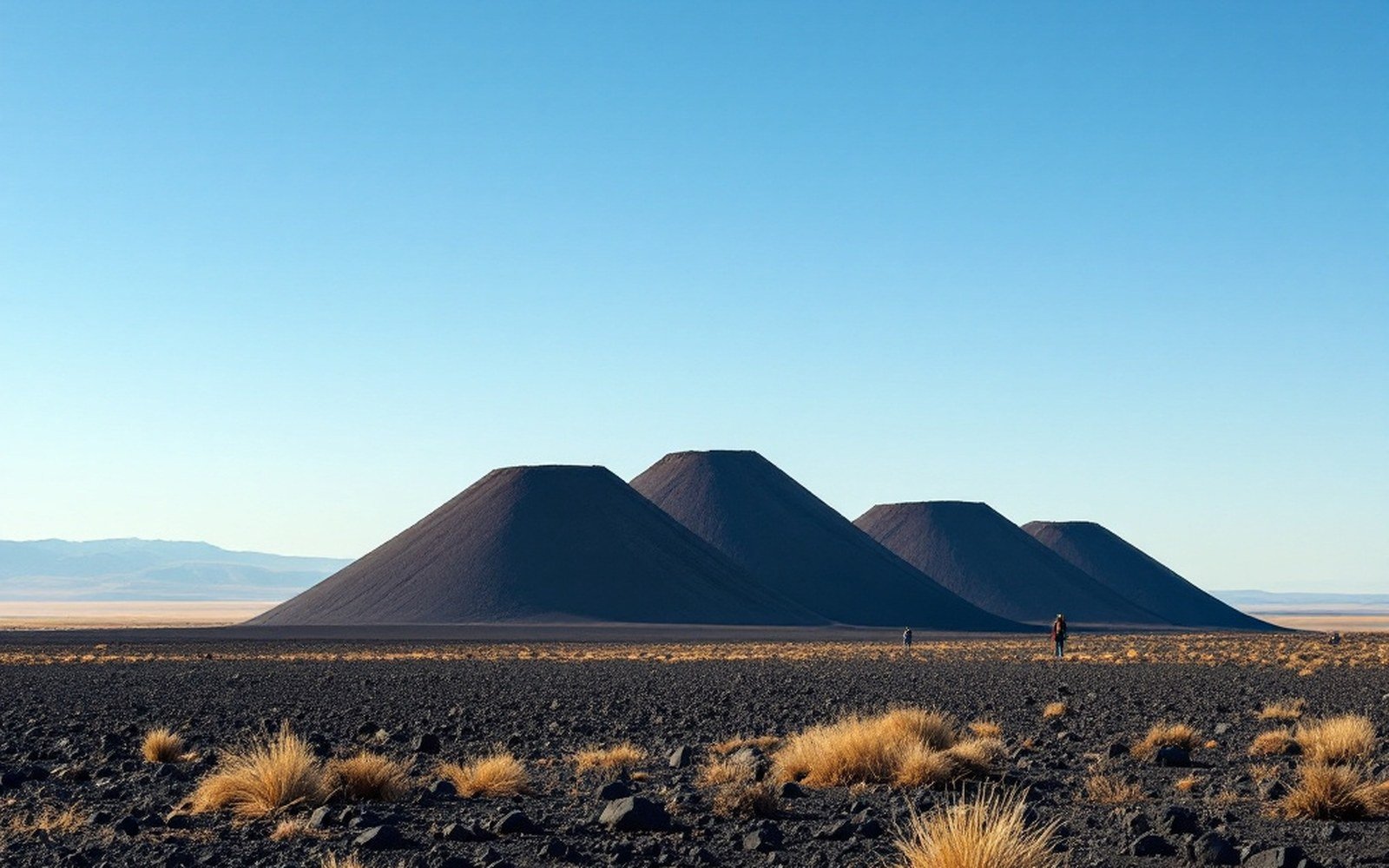
01Cones on the Mesa
Three main cones — Bond, Black, and JA — rise from the flat surface of the West Mesa escarpment at roughly 35.15°N, 106.74°W, with a handful of smaller vents scattered nearby. They are young enough to look fresh. Lava flows from this field erupted somewhere between 150,000 and 200,000 years ago, and the cones still hold their original form: steep-sided piles of red and black scoria with open craters at their summits, barely touched by erosion.
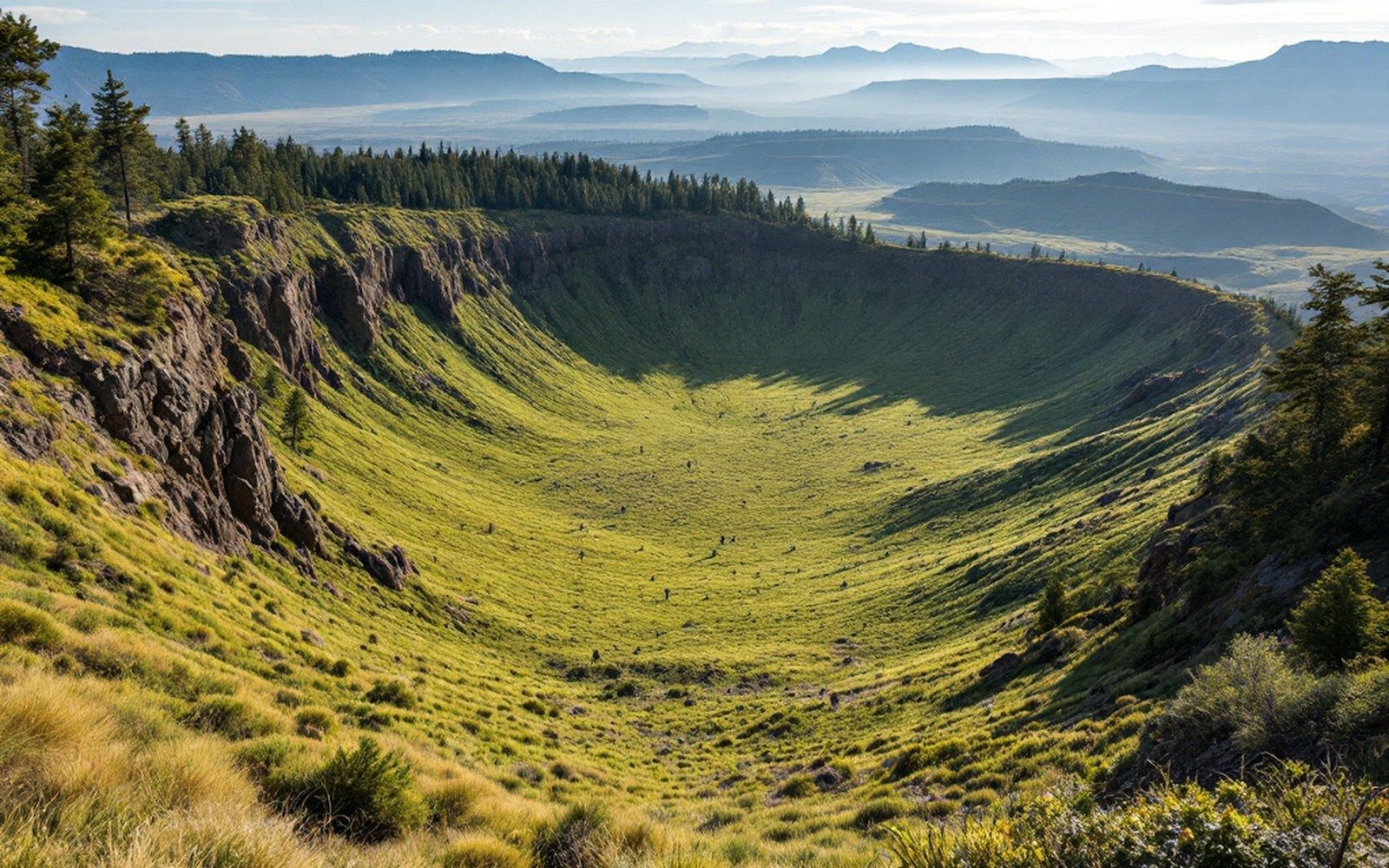
The alignment is the giveaway. Rather than clustering randomly, the vents string out along a roughly north-south trend that mirrors the geometry of the Rio Grande rift itself. Below the surface, a fissure in the crust guided magma upward; where gas pressure was highest, it broke through and built a cone. The cones are the surface expression of that deeper plumbing, not isolated accidents.
The basalt here is part of a broader eruptive episode that produced flows across much of the West Mesa. Petroglyph National Monument preserves the boulders from those flows along the escarpment's eastern edge — surfaces darkened by desert varnish and used for millennia by the ancestors of today's Pueblo peoples. The cones that fed those flows sit a short distance to the north and west, still recognizable for what they are.
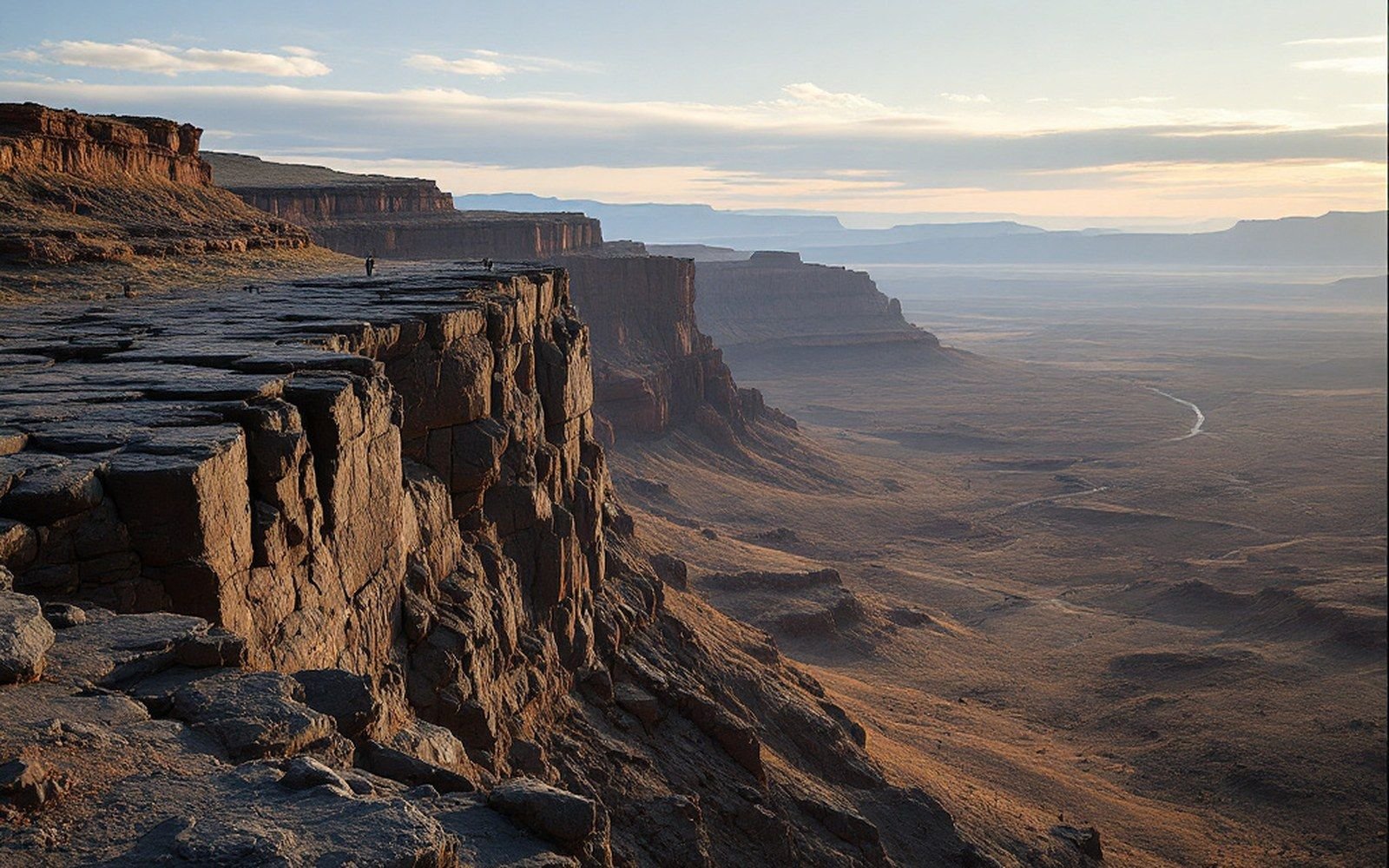
What the cones reveal is the rift's mechanics in miniature. Extension — the slow pulling apart of the crust — opens pathways along faults and fissures. Magma generated in the thinning lithosphere rises along those weaknesses. When it reaches the surface with enough gas content, it fragments into scoria and cinder, building the steep cone walls grain by grain as clots of lava are thrown into the air and fall back around the vent. Quieter outpourings from the same vent or nearby fissure spread as the lava flows that now form the mesa surface. The United States Geological Survey has documented this field as part of the broader basaltic volcanism associated with the Albuquerque Basin.
Below the surface, a fissure in the crust guided magma upward; where gas pressure was highest, it broke through and built a cone.
The cones are not thought to be extinct in any permanent sense. The rift remains active; the Socorro magma body sits in the crust roughly 19 kilometers deep, well to the south, and seismic monitoring by the Incorporated Research Institutions for Seismology records the rift's continuing restlessness. Whether this particular fissure could reactivate is an open question the geology does not yet close.